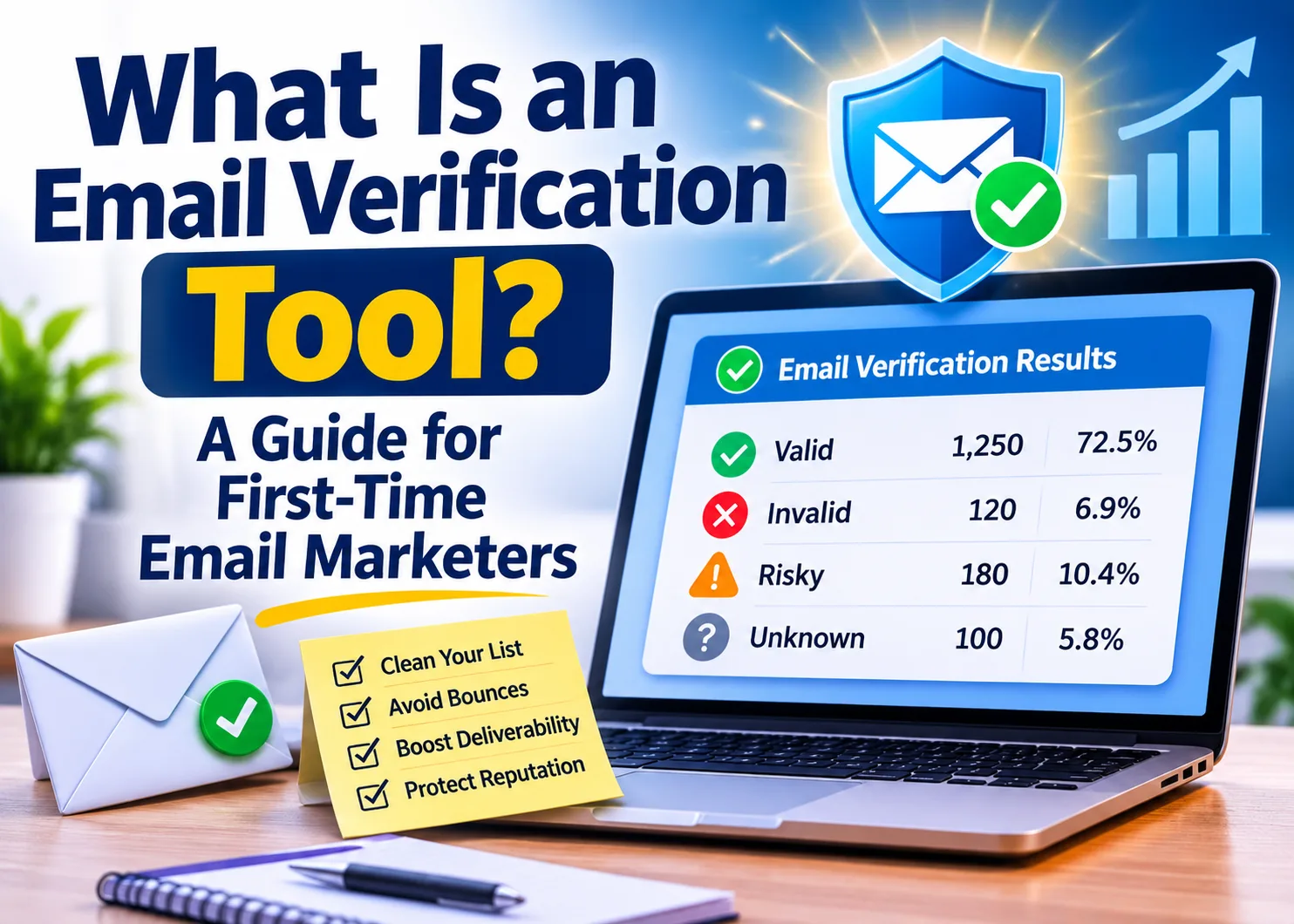
Most first campaigns start with an imported list and a click on send. By the next morning, the report shows a stack of bounces and open rates that look oddly low. Blame often lands on the subject line. The list is the likelier culprit, because addresses go stale, people mistype them at signup, and a few might have never been real inboxes to begin with.
An unchecked list puts your sender reputation at risk from day one. The job of an email verification tool is to test every address on that list and report which ones can receive mail. Most tools do this by querying the receiving server, so nobody on your list gets a message or notices the check.
In practice, you upload a list, usually as a CSV file, and wait while the tool works through it. The download comes back with a status next to every address. Some tools also sync with your email platform and push the cleaned list straight back. After that, you send only to the addresses that passed. Once your contact list is clean, choosing the right email marketing software can help you organise subscribers, manage campaigns, and build effective follow-up workflows.
Why Bad Addresses Hurt New Senders
A hard bounce means the address doesn’t exist or can’t accept mail. A high rate of hard bounces can signal poor list hygiene and may damage sender reputation, especially for a new sending domain. A handful on a large list is normal, but a pattern may be suspicious.
Suppose you import 2,000 contacts from an old CRM export, and 100 of them turn out to be dead. That's a 5% bounce rate on the very first send, before the domain has any track record to offset it.
Some addresses are spam traps, which mailbox providers and anti-abuse groups use to spot senders with careless list habits. One hit early on can dent a reputation you've barely started to build.
User complaints matter too. Verification can't stop a real person from hitting the spam button. What it does remove is dead addresses and known traps, two common sources of early trouble. Maintaining accurate contact lists is one part of improving email deliverability, helping campaigns reach more intended recipients and protecting the effectiveness of future sends.
The Checks Behind the Verdict
A typical run puts every address through a handful of tests, and each one catches a different kind of problem. Together they filter out typos, dead domains, and throwaway accounts. The exact factors checked depend on the tool you choose, but these are the most common:
- Syntax and format: Typos, a missing @ symbol, illegal characters.
- Domain and MX records: Whether the domain exists and has the mail server (MX) records needed to receive email.
- Mailbox check: The tool asks the receiving server whether it would accept mail for that address, without delivering anything.
- Catch-all detection: Some domains accept every address, so an individual mailbox can't be confirmed. These get flagged.
- Disposable addresses: Temporary inboxes created for one-time signups.
- Role accounts: Shared addresses such as info@ or support@, which often have no single owner.
- Spam traps and complainers: Known traps, plus addresses with a history of reporting mail as spam. No service catches every trap.
Note that not every check is equally certain. Syntax and domain tests give clear answers, while mailbox and catch-all tests depend on how the receiving server responds. Some servers refuse to answer or delay unfamiliar senders (a practice called greylisting), and a few accept everything. That's why results may include an unknown label.
The Four Result Labels, Explained
Most tools sort addresses into four labels. Names differ from vendor to vendor, but the logic usually remains the same.
Status | What it means | What to do |
Valid | The mailbox exists and accepts mail | Send |
Invalid | The address does not exist or cannot receive mail | Remove |
Risky | The address may work but carries extra risk, such as a disposable or role address | Exclude, or test in a small separate segment |
Unknown | The server gave no clear answer, for example, after a timeout or greylisting | Re-verify later or exclude |
Risky and unknown results call for judgment, not automatic deletion. A catch-all domain isn't bad by itself, since plenty of companies run one, but you can't confirm that a specific mailbox exists there. Try those addresses in a small separate batch and watch the bounces. If the results stay clean, widen the segment.
Good Moments to Run a Check
The clearest moment is before the first send to any imported list. Next comes any campaign to contacts who have been quiet for months, since addresses decay as people change jobs and abandon old mailboxes. Lists that keep growing deserve a recurring check. Some tools can also validate addresses at signup, which lets a visitor fix a typo while they're still on the page.
Where Verification Stops
Verification confirms that an address can receive mail, but this doesn’t mean the person agreed to hear from you. In the US, commercial email must include a clear way to unsubscribe, and opt-out requests have to be honored within 10 business days. The rules cover business-to-business messages too.
A clean list leaves the rest of deliverability untouched. Authentication records (SPF, DKIM, and DMARC) show mailbox providers that your messages really come from your domain. The domain's reputation and the content of each email also influence where it lands, and no verification report can promise inbox placement.
A brand-new domain also needs to build sending history gradually, which is why many teams pair verification with warm-up and authentication checks. A clean email list is only one part of campaign success; businesses also need clear messaging that sets expectations and gives recipients a relevant reason to engage.
Your First List, Step by Step
Choose the tool first. Reputable providers state how long they keep uploaded lists, whether the data is encrypted, and how to request deletion. CSV upload and a sync with the platform you are already sending from are worth having, and the result labels should explain themselves. Treat any accuracy figure as a vendor claim. A free trial on a small list lets you compare the results with your own bounce history.
Then run the full list. Remove the invalid addresses and set the risky and unknown ones aside. Send the first campaign to the valid group in a modest batch, and watch the bounce and complaint numbers before scaling up. Repeat the check whenever the list changes enough to matter. None of this takes long, and it keeps bounces low while your sender reputation is still taking shape.
Read More Blogs on: